A logstore does more than just stack wood.
If your firewood isn’t stored properly, it won’t burn properly. Damp logs produce more smoke, less heat and a far less enjoyable fire — whether you’re using a stove or an open fire.
A well-designed outdoor logstore keeps your wood dry, ventilated and ready to use, while also adding structure and style to your outdoor space.
It’s a small detail that makes a big difference.
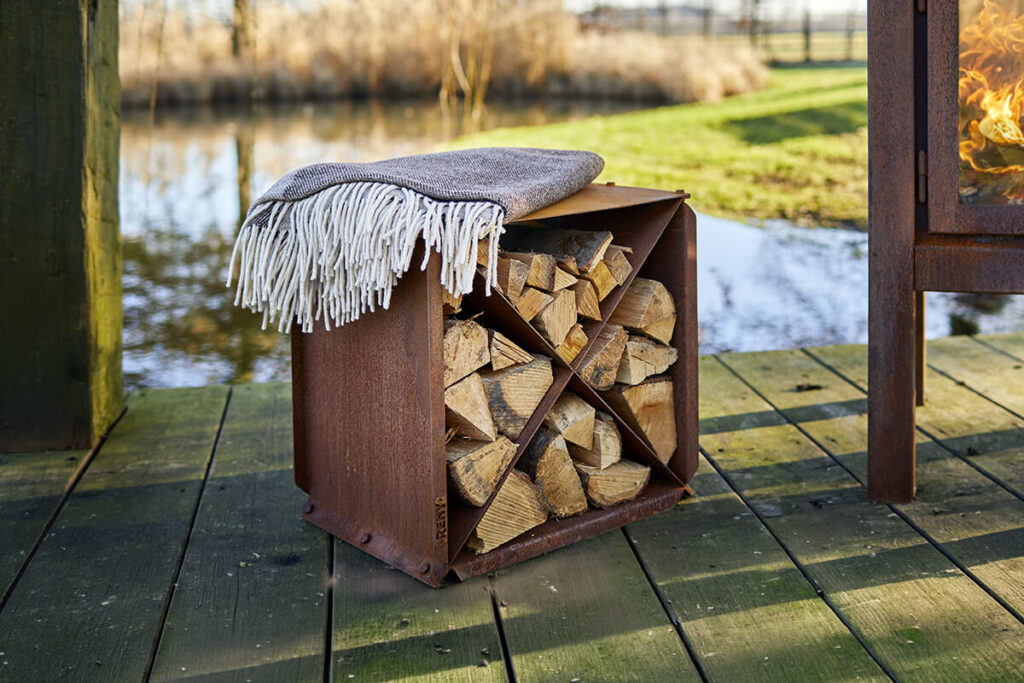
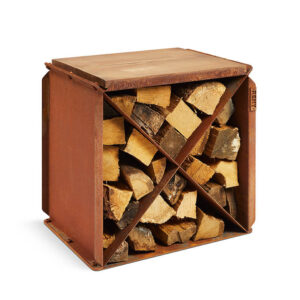
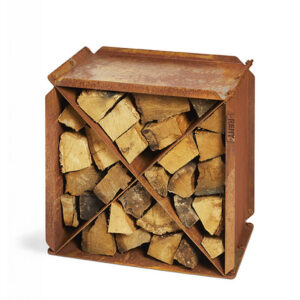
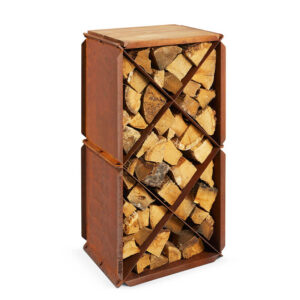
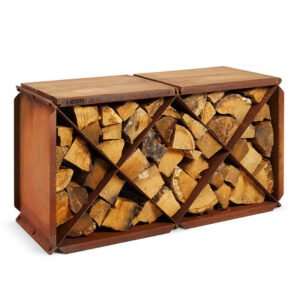
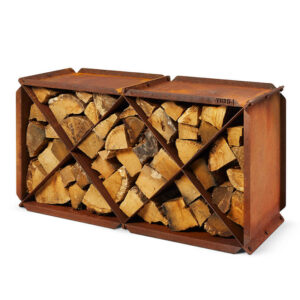
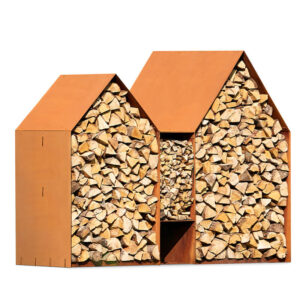
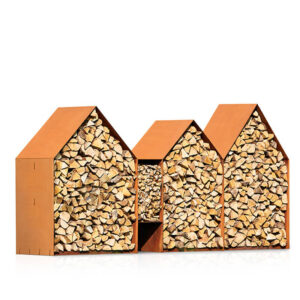
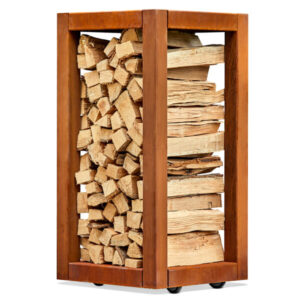
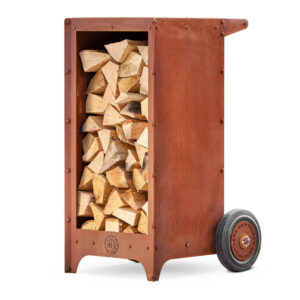
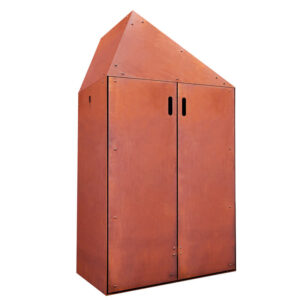
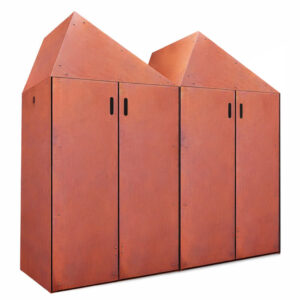
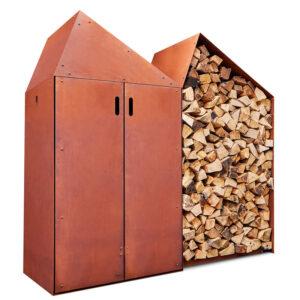
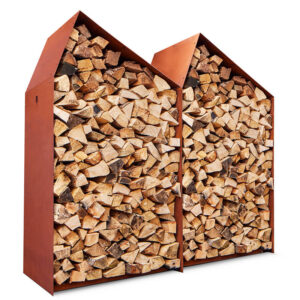
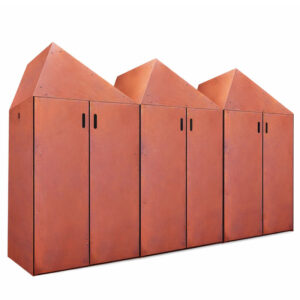
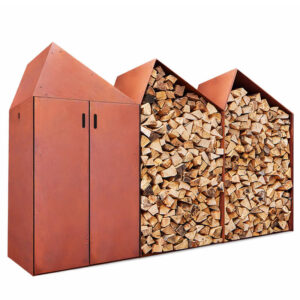
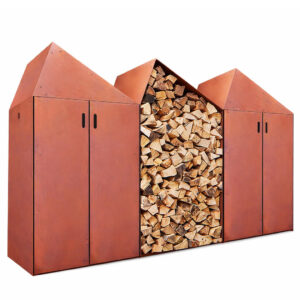
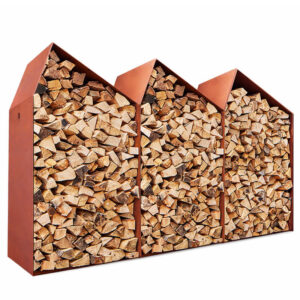
Firewood needs time and airflow to season correctly. Storing logs directly on the ground or in enclosed spaces traps moisture, leading to inefficient burning and excessive smoke.
A dedicated outdoor logstore allows air to circulate while protecting your wood from rain, helping it dry naturally and burn more effectively.
There are different approaches to storing firewood, each with its own benefits.
The right option depends on where your logstore is positioned and how exposed it is to weather.
Logstores are no longer just functional add-ons. In many gardens, they form part of the overall design.
Clean lines, durable materials and structured storage turn firewood into a visual feature rather than something to hide away. When paired with an outdoor stove, a well-stacked logstore adds both practicality and атмосphere to the space.
Outdoor logstores need to handle year-round exposure. Materials like corten steel are designed to weather naturally, forming a protective outer layer that resists corrosion over time.
This makes them a low-maintenance, long-term solution compared to traditional timber storage options.
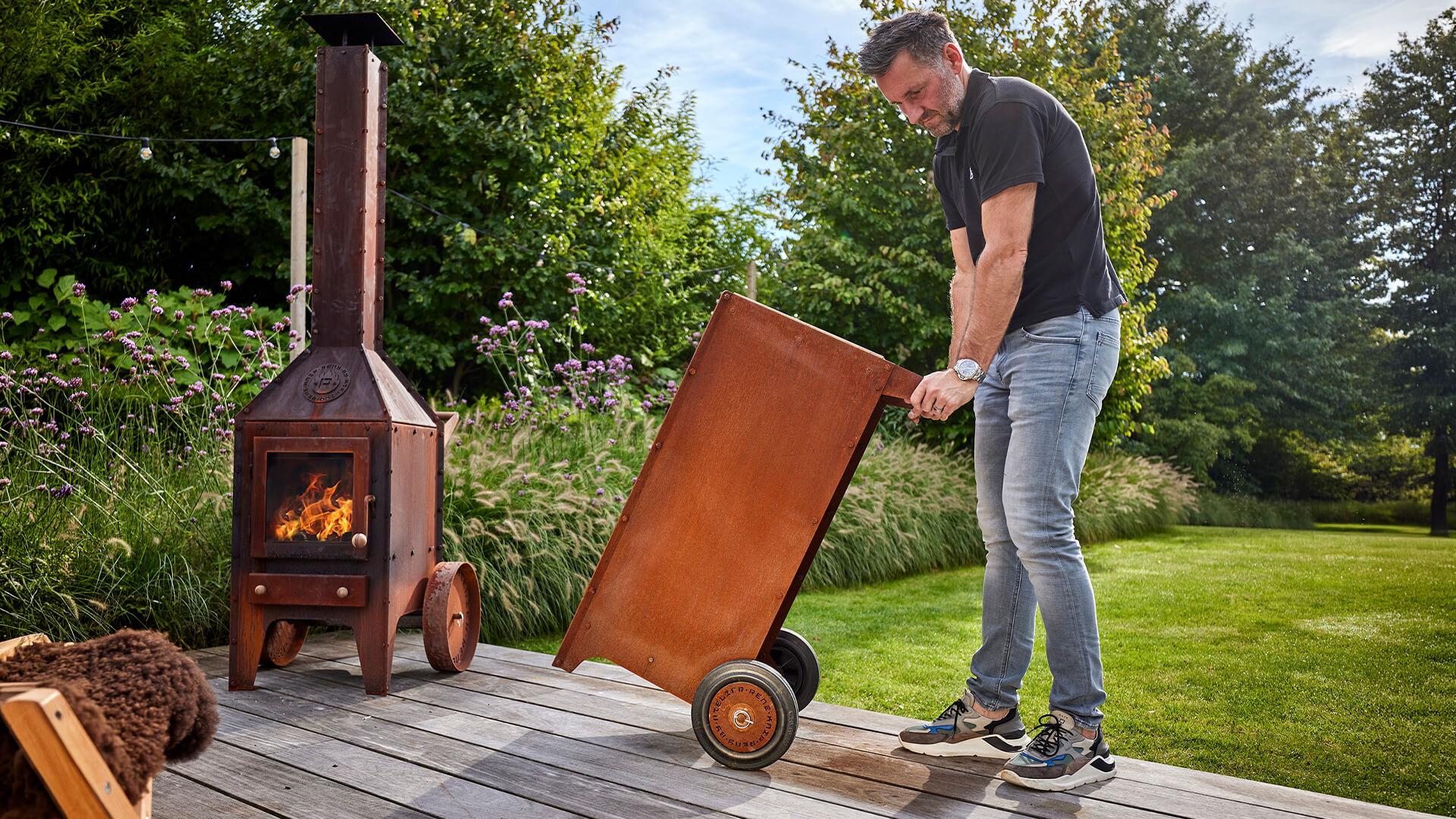
For the best results, your logstore should work alongside your heating setup.
Keeping dry, well-seasoned wood close to your outdoor woodburner improves convenience and ensures consistent performance every time you light a fire.
You can also integrate log storage into a wider outdoor setup, combining it with cooking and preparation areas to create a more complete space.
No matching results found