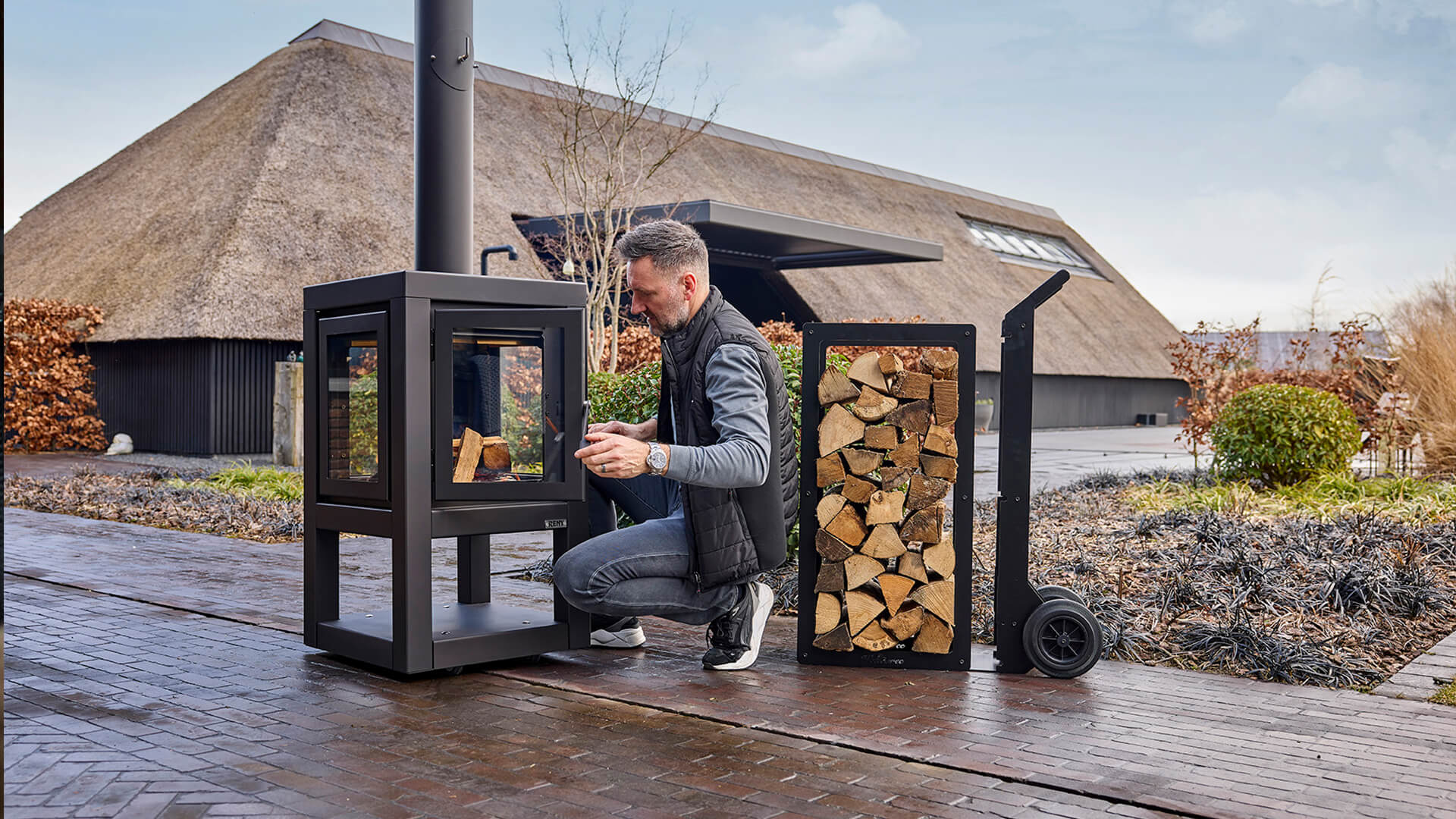
What is an Outdoor Woodburner?

Most people think outdoor heating means one of two things: a fire pit or a chimenea. And for a long time, that was pretty much the case.

But there’s another option that’s become increasingly popular in modern garden design — the outdoor woodburner.

At first glance, it might look similar to other garden fires. But in reality, it behaves very differently. If you’ve come across one and thought “what actually is that?”, you’re not alone.

This guide explains exactly what an outdoor woodburner is, how it works, and where it fits into a typical UK garden.
How Does An Outdoor Woodburner Work?

Outdoor woodburners use the same basic principles as indoor stoves, just adapted for outdoor conditions.

Air is drawn into the firebox to feed the flame, while hot air and gases are directed upwards through the chimney. This natural draw helps:

  • Maintain a steady burn
  • Improve efficiency
  • Reduce smoke lingering at seating level


Because the fire is contained and airflow is managed, it behaves more predictably than an open flame — especially in changing weather conditions.

What is an Outdoor Woodburner?

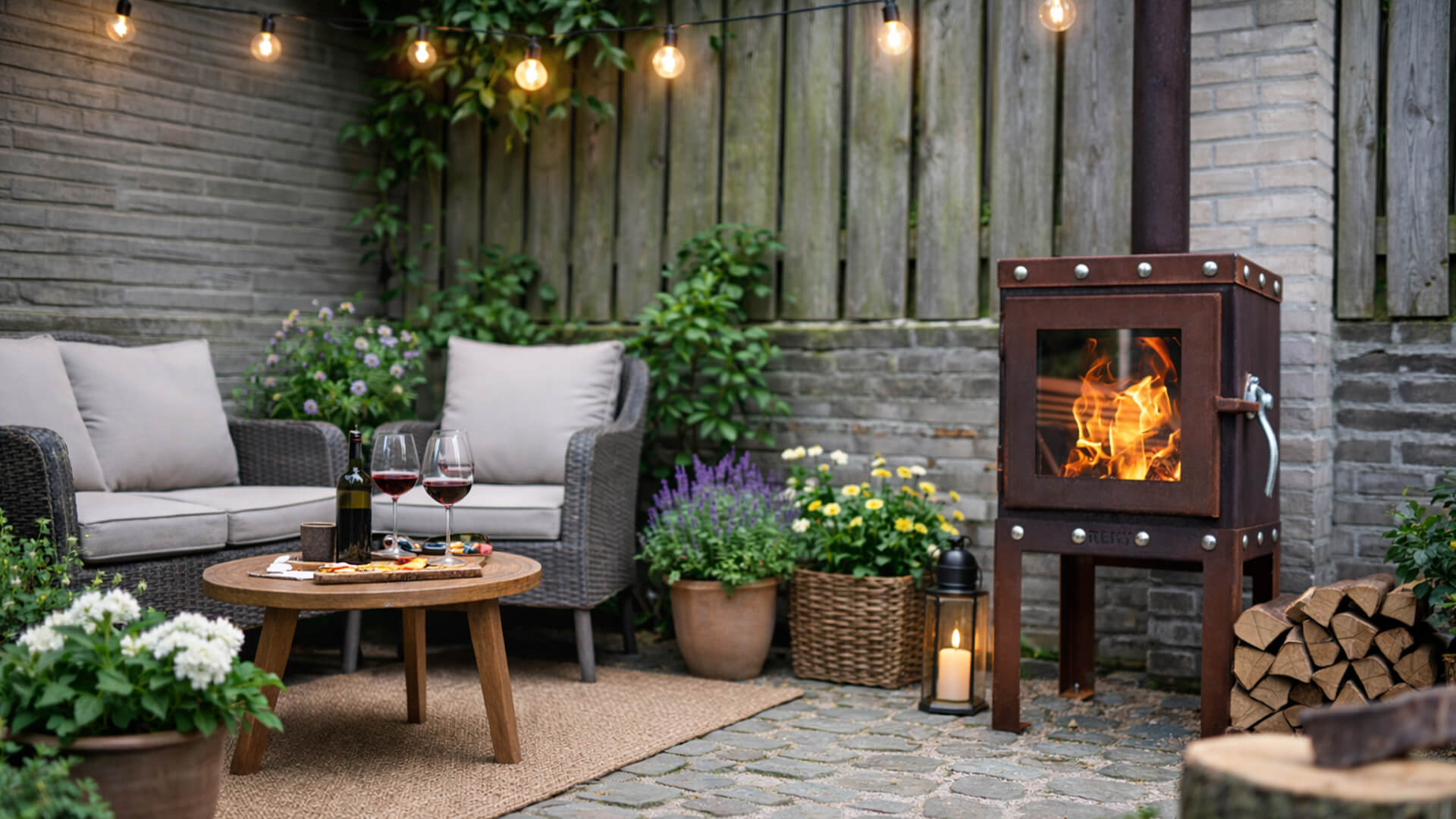
At its simplest, an outdoor woodburner is a wood-burning stove built specifically for outdoor use.

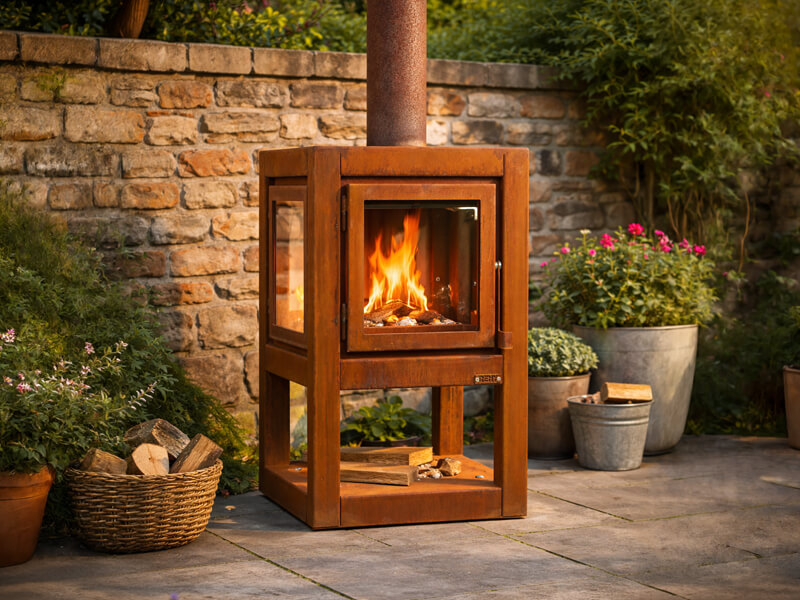
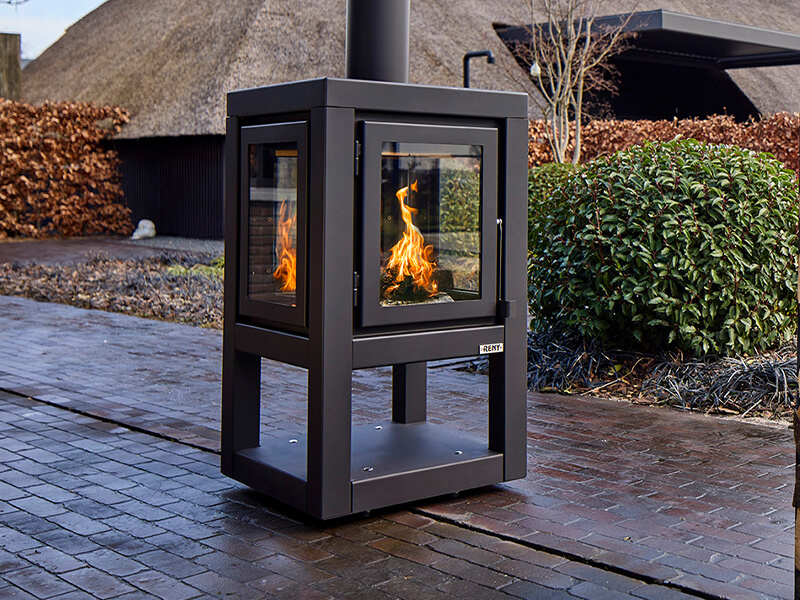
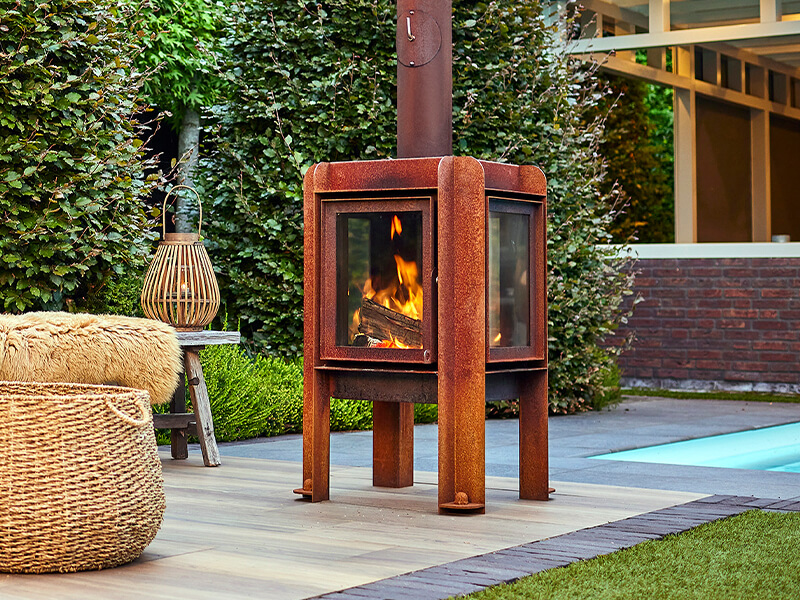
Instead of an open flame, the fire burns inside a structured unit. Most designs include:

  • A firebox where the logs burn
  • One or more openings or glass panels to view the flames
  • A chimney or flue system to carry smoke away
  • Built-in airflow to support efficient burning


This isn’t just about creating a visible flame — it’s about creating a controlled, usable heat source within your garden.

An outdoor woodburner is an enclosed wood-burning stove designed for use in gardens and outdoor spaces. It contains the fire within a steel structure and uses a chimney to direct smoke upwards, creating a more controlled, consistent, and usable source of heat.

Where do Outdoor Woodburners Fit in a Garden?

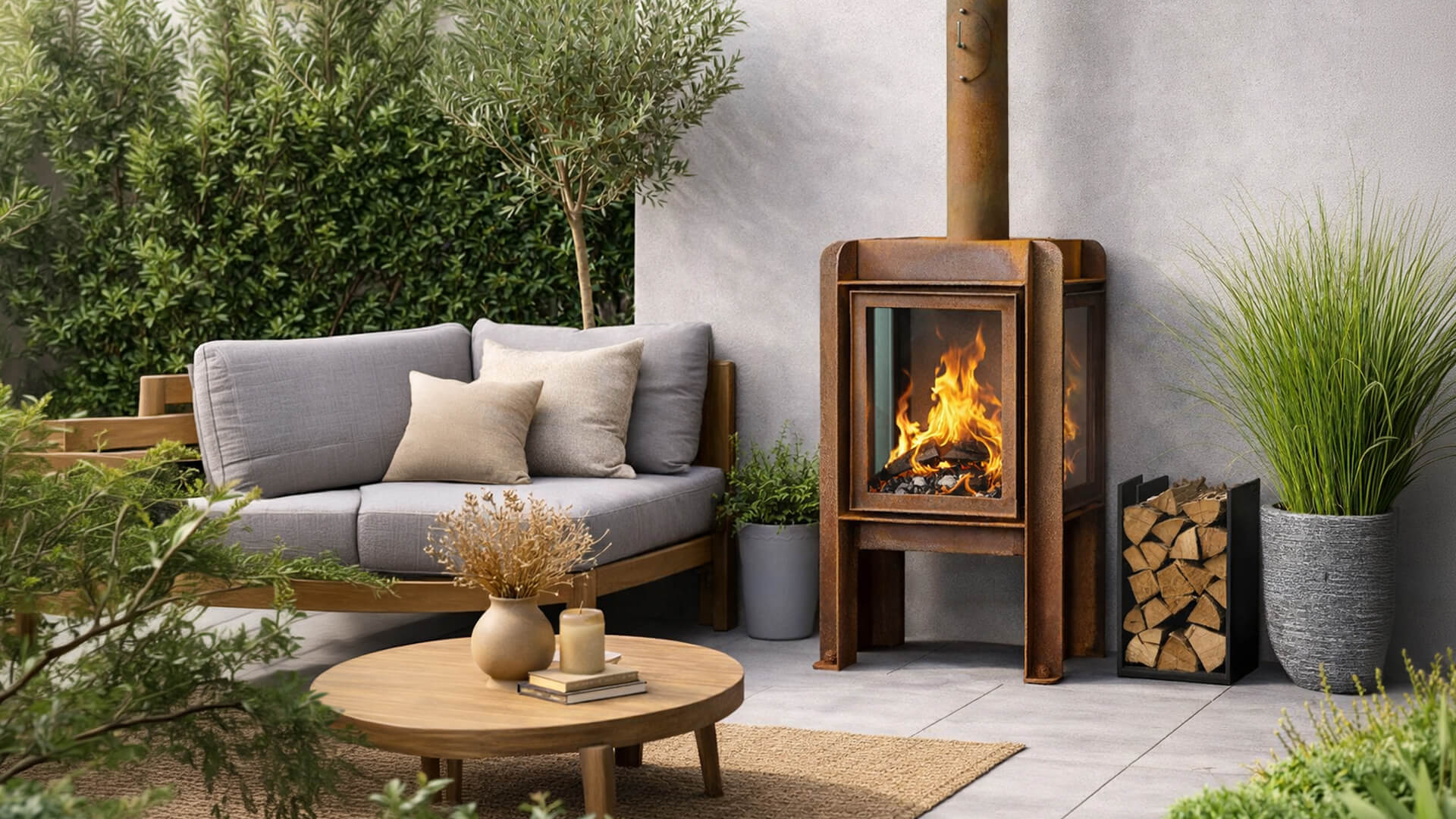
Outdoor woodburners are typically used as a fixed feature within a seating or entertaining area.

You’ll often see them placed:

  • On patios or paved areas
  • Within outdoor seating zones
  • As part of an outdoor kitchen setup
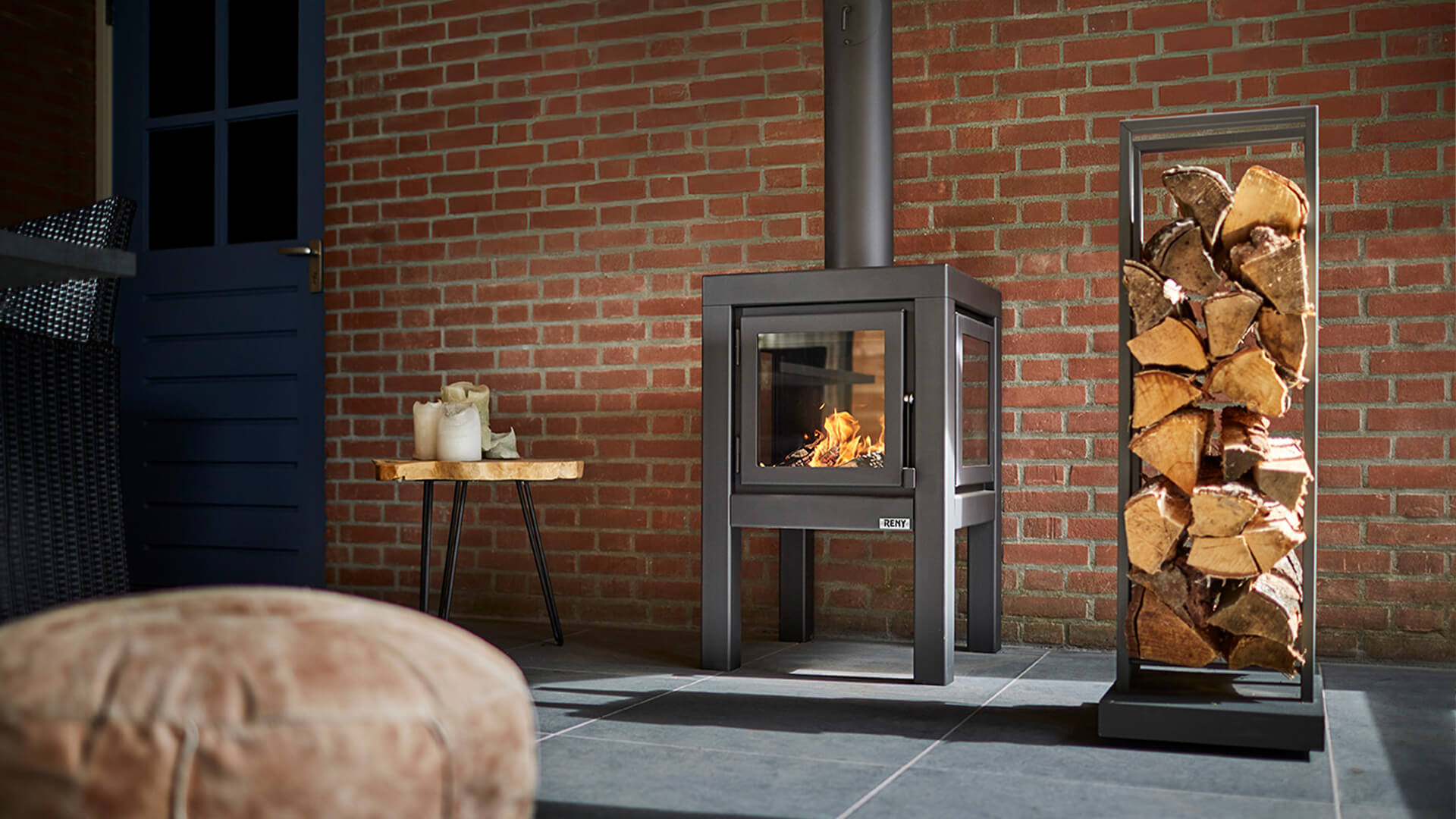
  • Positioned near walls or boundaries (with the correct clearances)


In most cases, it becomes a fixed feature — something the rest of the space is designed around, rather than added as an afterthought.

What Are the Main Benefits?

More Usable Heat – Because the fire is contained, heat builds and radiates more effectively — making it far more practical for real-world use.

Better Smoke Control – The chimney draws smoke upward, reducing the chances of it drifting across seating areas.

More Efficient Burning – Controlled airflow allows logs to burn more cleanly and consistently.

Strong Visual Presence – Outdoor woodburners are designed to be a focal point — adding structure and purpose to a garden layout, not just heat.

Things to Consider

Outdoor woodburners are a more considered addition than open fires, so there are a few practical points to keep in mind:

  • Placement matters — you’ll want to think about how it fits into your layout
  • They’re typically a fixed feature, rather than something moved around
  • Fuel storage is usually planned alongside it for convenience


These aren’t drawbacks, but part of treating it as a long-term feature within your garden.

If you’re considering adding an outdoor woodburner to your garden, explore our range of RB73 outdoor woodburners to see how different models can fit into your space and layout.

Common Misconceptions

“It’s just a decorative feature”

While they look great, outdoor woodburners are designed to produce meaningful heat.

“They’re not environmentally friendly”

They are infact quite the opposite compared to other outdoor wood burning products like firepits and chimeneas, thanks to the closed combustion.

“They’re only for large gardens”

There are models designed for smaller spaces, including options suited to wall placement.

“They’re complicated to use”

In reality, they work much like any wood-burning stove — simple once you’ve used one.

FAQs

Are outdoor woodburners safe to use in a garden?

Yes — when installed and used correctly. The enclosed design helps contain the fire and makes them a controlled heating option.


Do they produce a lot of smoke?

No. The chimney system is designed to draw smoke upwards, rather than allowing it to drift across seating areas.


Can they be used year-round?

Yes. They’re particularly useful during cooler evenings in spring, autumn, and even winter.


Do I need a lot of space?

Not necessarily. Many models are designed to work well in standard UK garden spaces and many models can be placed infront of a wall rather than centrally to save further space,

Final Thoughts

An outdoor woodburner is best thought of as a dedicated outdoor heat source, rather than just a decorative fire.

It offers a more controlled way to enjoy a real wood fire in your garden, while also acting as a central feature within the space.

Explore Outdoor Woodburners

If you’re considering adding an outdoor woodburner to your garden, you can explore our range of RB73 outdoor woodburners to find a model that suits your space and layout.

If you’re thinking about adding one to your garden, these guides will help you take the next step:

Related Posts

How to Replace Glass in an RB73 Stove

Replacing glass in an RB73 stove depends on the model and location: door glass is removed using pop-out clips, while side and rear panels (on certain models) lift out or are unbolted first. In all cases, the new glass must sit perfectly flat with no wobble—there are no rope seals or tightening involved.

Read More
0