What is an Outdoor Kitchen Trolley?

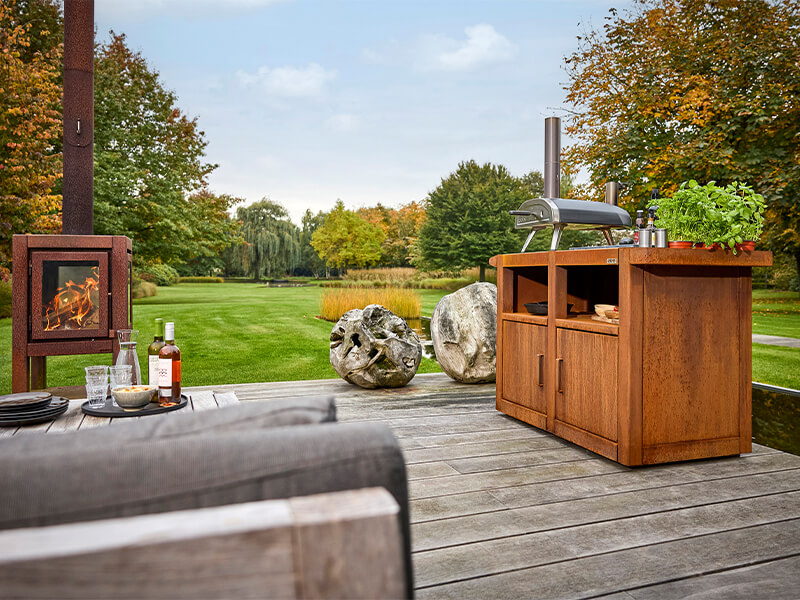
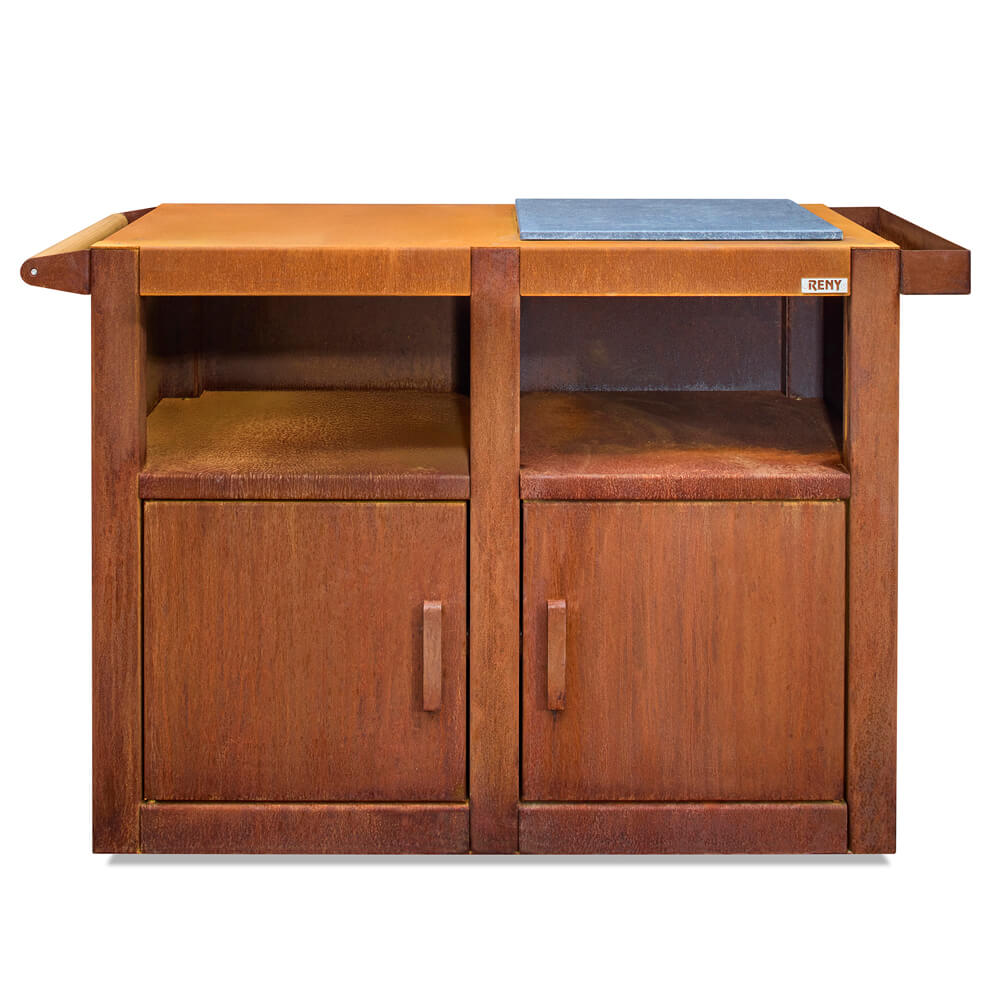
At its core, an outdoor kitchen trolley is designed to make cooking outside easier and more organised. It provides a dedicated space for food preparation, a surface for placing hot cookware, and storage for tools, fuel, or accessories—all in one unit.

Rather than juggling everything between your indoor kitchen and the garden, a trolley creates a self-contained cooking station. Everything you need is in one place, making the whole experience smoother, more efficient, and far more enjoyable.
Why Choose an Outdoor Kitchen Trolley?

A fixed outdoor kitchen can look impressive, but it comes with cost, installation, and a layout that’s difficult to change. An outdoor kitchen trolley offers a more flexible alternative.

You can move it to suit your space, reposition it depending on the weather, and adapt your setup over time. For many UK gardens—where space is limited and conditions change quickly—this flexibility makes a huge difference in how often the setup is actually used.

What Can You Use an Outdoor Kitchen Trolley For?

Outdoor kitchen trolleys are designed to support a wide range of cooking setups, making them far more versatile than they might first appear.

They can be used for:

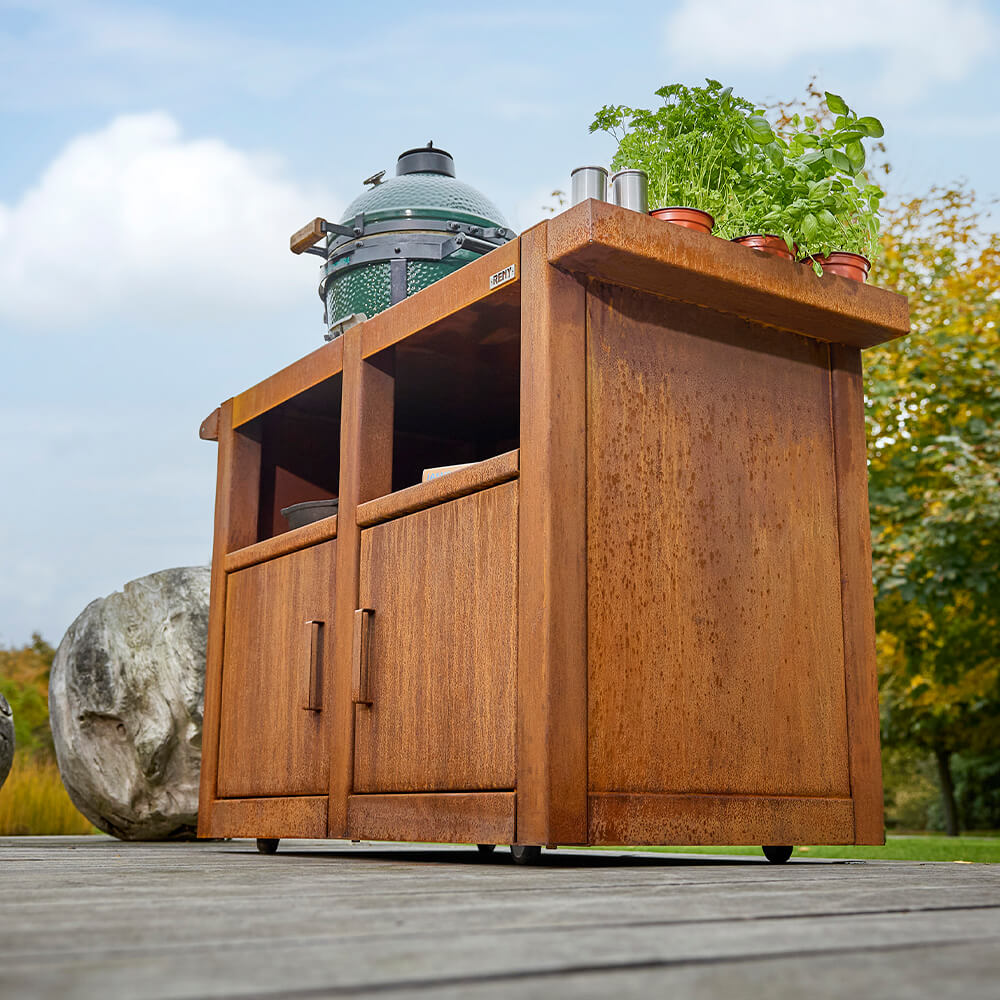
  • Supporting grills or Kamado ovens
  • Food preparation and plating
  • Storing charcoal, firewood, or cooking tools
  • Creating a compact outdoor cooking station
  • Forming part of a larger modular kitchen setup


With the right design, a trolley becomes the centre of your outdoor cooking space, not just an add-on.

An outdoor kitchen trolley is a mobile, freestanding unit designed to provide workspace, storage, and cooking support in an outdoor setting. Built from durable, weather-resistant materials, it allows you to create a flexible outdoor cooking area without the need for a permanent kitchen installation.

What to Look for in an Outdoor Kitchen Trolley

Not all outdoor kitchen trolleys are built the same, so it’s worth focusing on the features that actually affect how you’ll use it.

  • Durability: Materials that can handle year-round outdoor conditions
  • Mobility: Wheels and handles that make repositioning easy
  • Work surface: A practical area for preparation and cooking tasks
  • Storage: Space for fuel, tools, and accessories
  • Flexibility: The ability to adapt or expand your setup over time


Getting these right ensures the trolley becomes something you use regularly—not something that sits unused in the corner.

A Smarter Way to Build an Outdoor Kitchen

For many people, an outdoor kitchen trolley is the starting point for something bigger. Instead of committing to a full outdoor kitchen from day one, you can begin with a single unit and build around it.

Additional units, cooking equipment, or storage can be added over time, creating a setup that evolves with how you cook and use your space. It’s a more practical, flexible approach that avoids the cost and permanence of a fixed installation.

Build Your Outdoor Kitchen Setup

If you’re looking to create a more functional outdoor cooking space, a purpose-built kitchen trolley is a great place to start. The RB73 BBQAR range is designed specifically for outdoor use, with options for Kamado grills, flat-top cooking, and modular layouts that can grow with your setup.

Rather than committing to a fixed outdoor kitchen, you can start with a single unit and expand over time—creating a flexible, high-quality cooking area that works around your space.

Explore the BBQAR Outdoor Kitchen Range

Do you really need a full outdoor kitchen, or just a smarter way to cook outside?

Final Thoughts

An outdoor kitchen trolley is one of the simplest ways to transform how you cook outside. By bringing preparation, cooking, and storage into one place, it creates a more functional and enjoyable setup without the need for a permanent build.

For anyone looking to improve their outdoor cooking space, it’s a smart and flexible place to start.

Related Posts

How to Replace Glass in an RB73 Stove

Replacing glass in an RB73 stove depends on the model and location: door glass is removed using pop-out clips, while side and rear panels (on certain models) lift out or are unbolted first. In all cases, the new glass must sit perfectly flat with no wobble—there are no rope seals or tightening involved.

Read More
0